
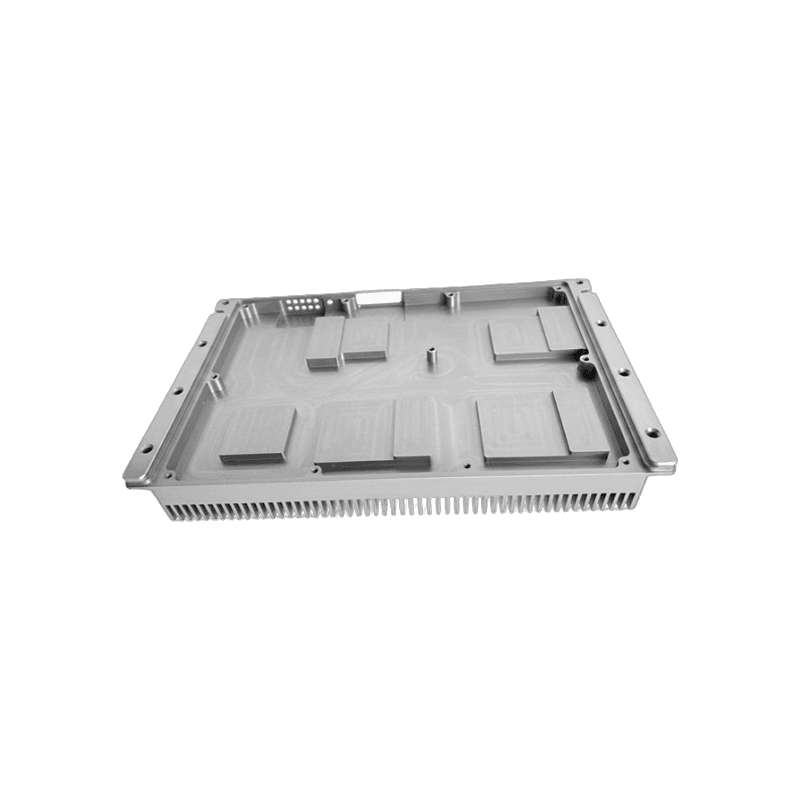
Pulsating Heat Pipe (PHP)
Novel phase-change technology utilizing oscillating capillary loops. Perfect for highly compact, high-density systems under dynamic thermal loads.
Pulsating Heat Pipes (PHPs) represent an innovative leap beyond conventional heat pipe designs. A serpentine meandering capillary tube is partially filled with working fluid, naturally forming alternating liquid slugs and vapor bubbles.
Thermal input at the evaporator causes rapid bubble expansion that propels the entire fluid train into self-sustaining, high-frequency oscillations—transferring massive thermal loads without requiring porous internal wicks.
Technical Specifications & Performance
- Technology
- Oscillating capillary phase-change cooling (Pulsating Heat Pipe)
- Internal Wick
- Wickless design – pure surface tension capillary dynamics
- Form Factor
- Ultra-thin serpentine profiles (overall thickness from 0.8mm)
- Transient Response
- Instantaneous accommodation of sudden thermal load surges
- Orientation Independence
- Stable thermal spreading across varying acceleration vectors
- Materials
- Aluminum or copper alloy with FSW hermetic sealing
- Applications
- UAV drone avionics, tactical lasers, power dense battery packs