

Liquid Cold Plate (LCP)
Custom Liquid Cold Plates (LCP). We master all manufacturing types and advise you on the most efficient solution for your project.
Liquid Cold Plates (LCP) form the backbone of modern direct liquid cooling in high-power applications: from server CPUs and AI accelerators to EV traction inverters and Battery Energy Storage Systems (BESS).
ALVC masters all five industrial manufacturing processes for liquid cold plates and provides independent technical consulting to ensure the optimal balance of thermal resistance, pressure drop, weight, and unit cost for your project.
Technical Specifications & Performance
- Cooling Technology
- Single-phase or two-phase direct liquid cooling (DLC)
- Thermal Resistance (Rth)
- Down to 0.005 K/W (dependent on flow rate and channel geometry)
- Base Materials
- Aluminum alloys (Al-6063, Al-6061, Al-3003) | Pure Copper (C11000)
- Max Operating Pressure
- Up to 10 bar (FSW) | Up to 25 bar (Gun-drilled) | Up to 6 bar (Vacuum Brazed)
- Coolant Compatibility
- Water-Glycol mixtures (EGW/PGW), deionized water, dielectric fluids
- Leak Tightness Assurance
- 100% Helium Mass Spectrometer Testing (< 1×10⁻⁸ mbar·l/s)
LCP Manufacturing Variants
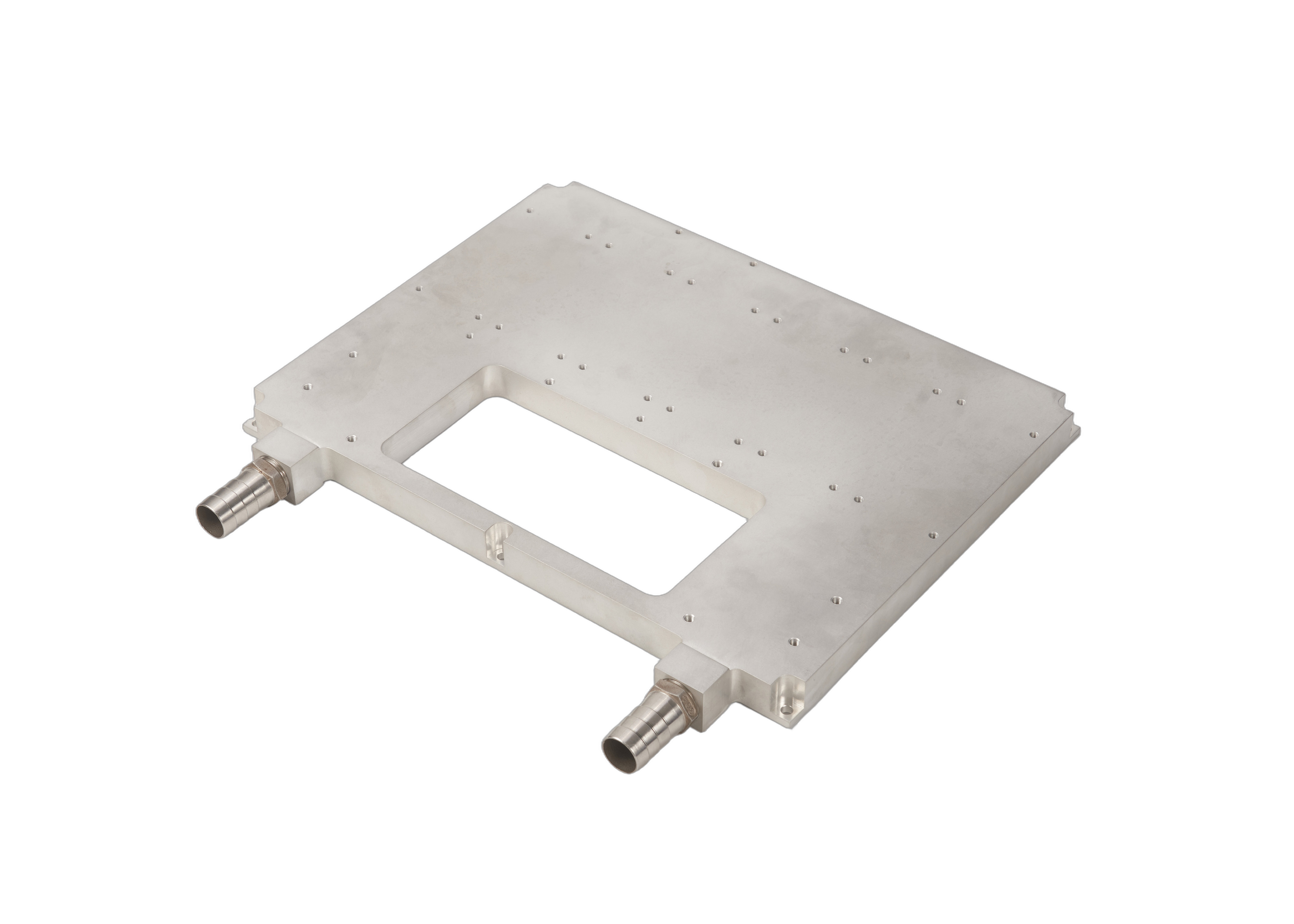
Friction Stir Welding (FSW)
For high volume and IGBT modules. Hybrid technology of CNC and welding. Absolutely leak-proof and flexible channel design.
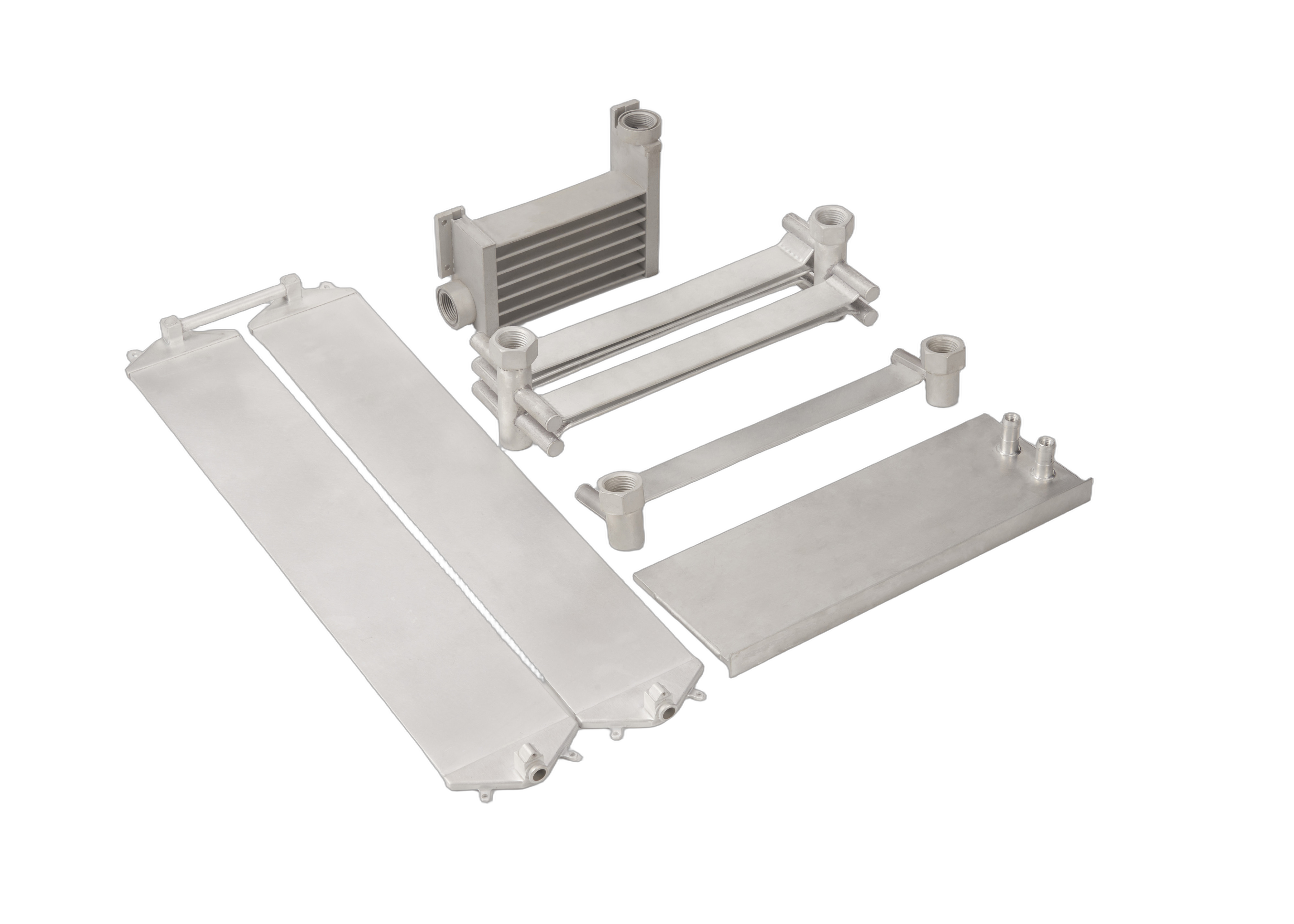
Vacuum Brazing
Complex, intricate internal cooling structures. Multiple layers possible. Ideal for high-end computing (HPC) and aerospace.
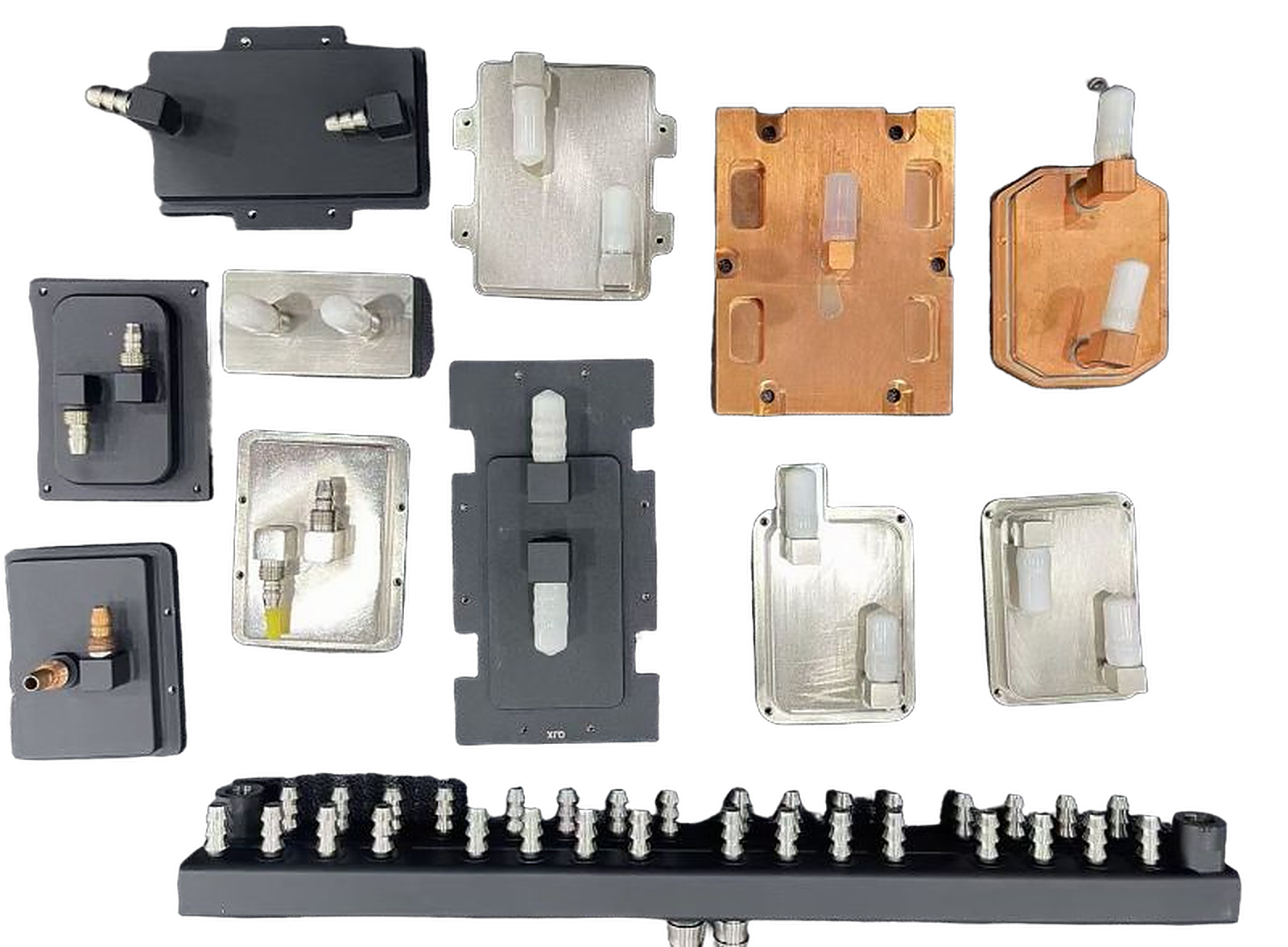
Skived Fin
Extremely fine fins for very large surfaces in minimal space. Cost-effective, no thermal resistance between base and fin.
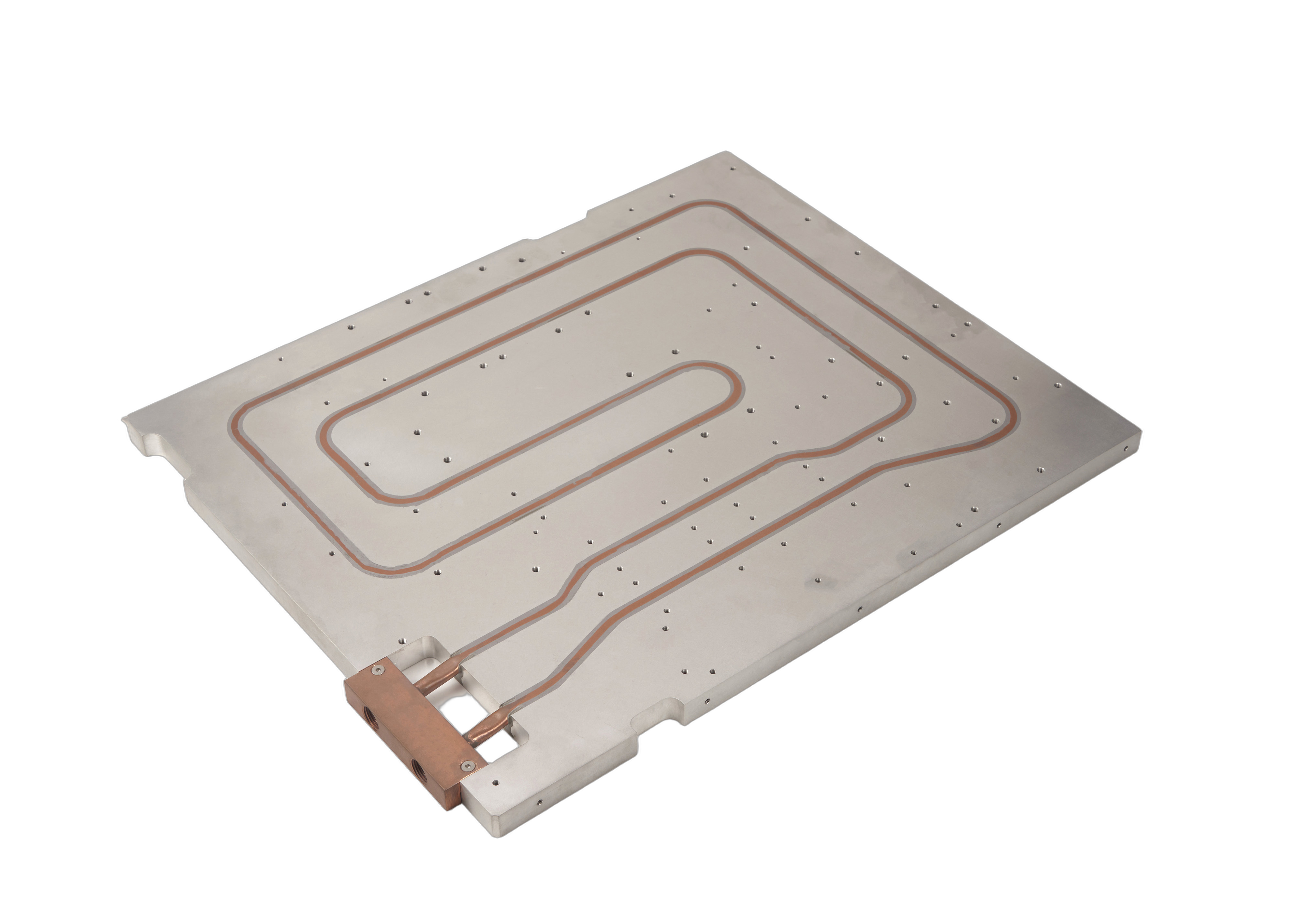
Embedded Tube
Pressed-in copper or stainless steel tubes in an aluminum base plate. Very cost-efficient and established for moderate heat loads.
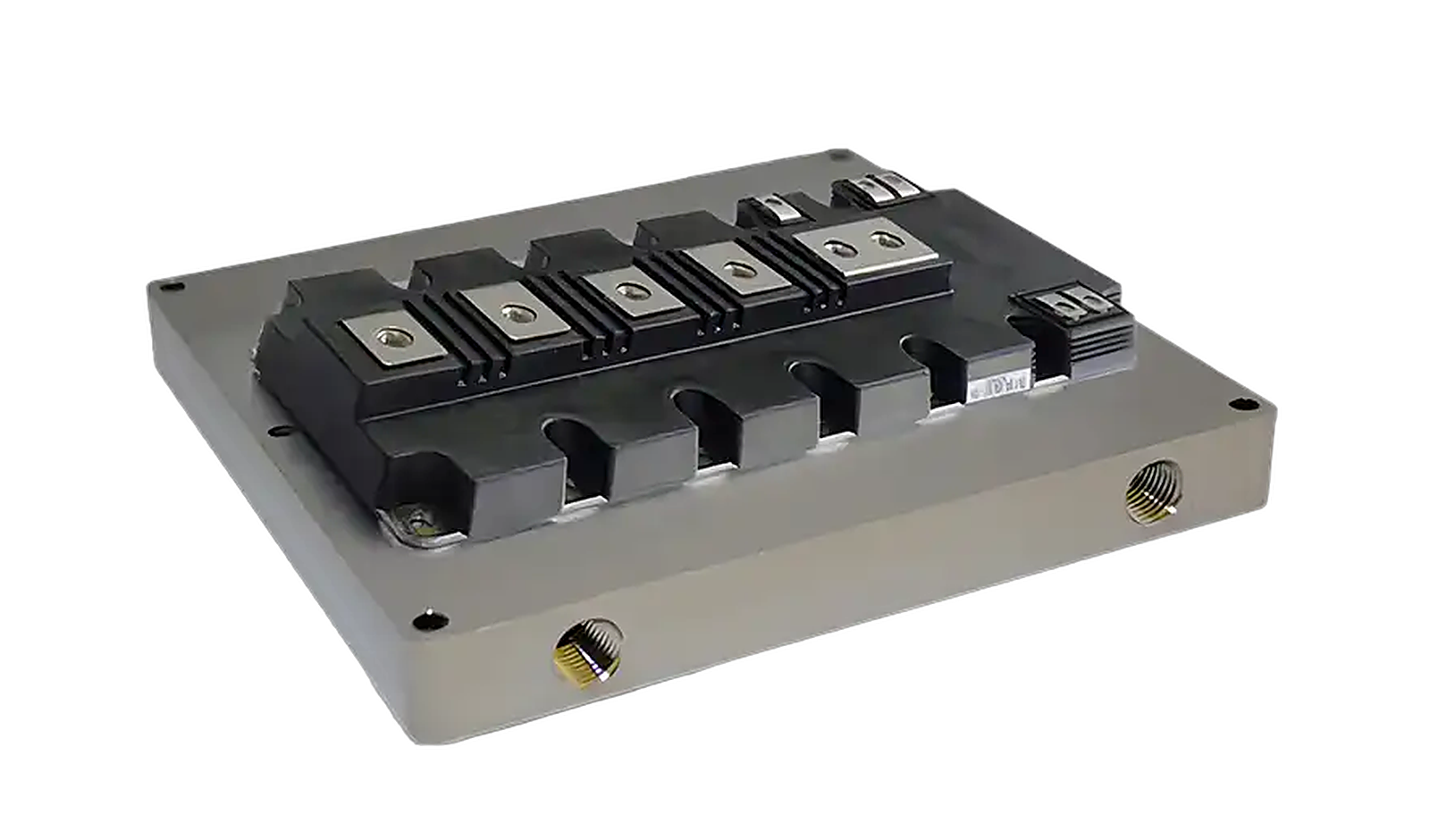
Gun-Drilled
Deep-hole drilled aluminum plates. Very robust, withstands extremely high pressures. Somewhat limited channel routing.